
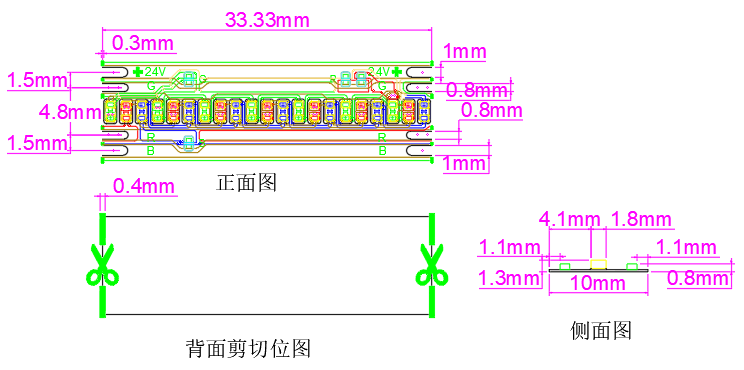
High-Density COB LED Strip Lights have changed the way we design commercial lighting. In the past, designers struggled with “hot spots” or visible dots from traditional LEDs. Today, technology provides a seamless line of light. If you are a professional buyer, architect, or engineer, understanding this technology is vital for your next project.
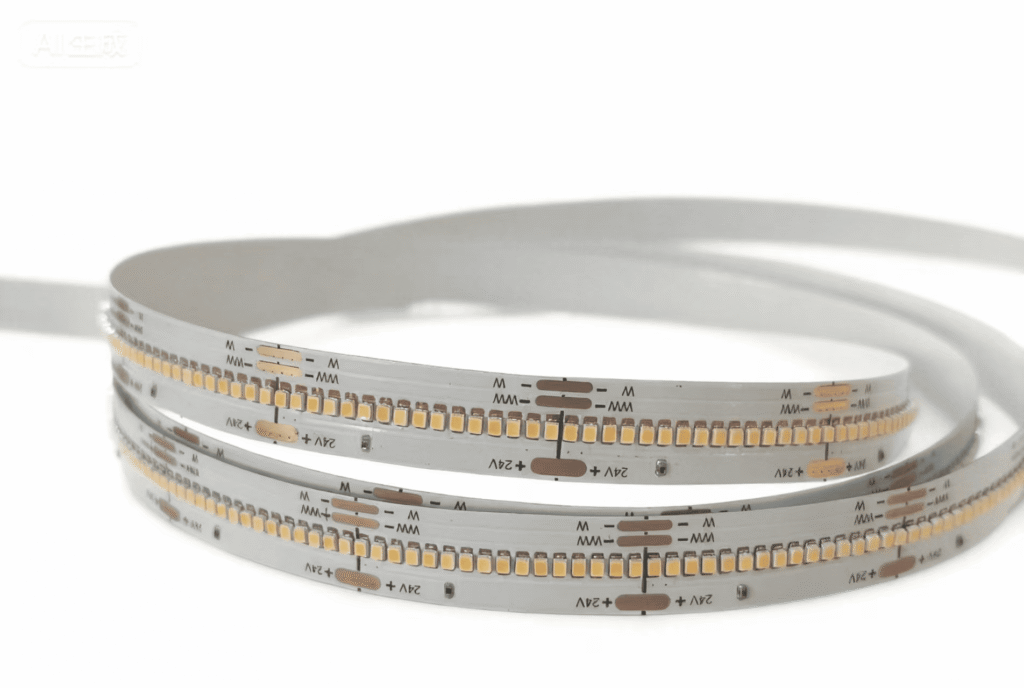
Table of Contents
- What Are High-Density COB LED Strip Lights?
- The Evolution of Chip-on-Board (COB) Technology
- Why Professional Buyers Prefer High-Density COB LED Strip Lights
- Technical Deep Dive: How High-Density COB LED Strip Lights Are Made
- Comparing COB vs. SMD: Which Should You Choose?
- Thermal Management in High-Density COB LED Strip Lights
- Sourcing Checklist for B2B Procurement Managers
- Application Scenarios for High-Density COB LED Strip Lights
- Installation Best Practices for Large Scale Projects
- Conclusion: Partnering for Quality
1. What Are High-Density COB LED Strip Lights?
High-Density COB LED Strip Lights represent the latest innovation in flexible lighting. “COB” stands for Chip-on-Board. This means the LED chips are placed directly on the printed circuit board (PCB). There is no traditional plastic housing for each chip.
Because the chips are so small, we can pack hundreds of them into a single meter. We then cover them with a continuous layer of phosphor silicone. This creates a smooth, “dot-free” glow. For B2B projects, this means you no longer need thick diffusers to hide the light dots. You get a perfect line of light immediately.
2. The Evolution of Chip-on-Board (COB) Technology
Lighting technology moves fast. Ten years ago, SMD (Surface Mount Device) was the standard. SMD 3528 and 5050 chips were everywhere. They were reliable but limited. You could see the space between the chips.
The industry needed something better. We moved toward “high density” SMD, but the heat was too high. Then came High-Density COB LED Strip Lights. By removing the individual chip packaging, we reduced the size. We also improved heat transfer. Today, this technology is the gold standard for architectural “cove” lighting and premium retail displays.
3. Why Professional Buyers Prefer High-Density COB LED Strip Lights
As an expert in the industry, I talk to many procurement managers. They all want the same thing: reliability and aesthetics.
3.1 Eliminating “Hot Spots”
Standard LEDs create dots. In a shallow aluminum profile, these dots look unprofessional. High-Density COB LED Strip Lights solve this. Even without a cover, the light is perfectly uniform. This is a game-changer for high-end hotel lobbies and luxury brands.
3.2 Enhanced Flexibility
Traditional SMD chips are mounted on the PCB using solder. If you bend the strip too sharply, a solder joint might crack. COB chips are much smaller. The continuous silicone coating protects them. This makes the strip much more flexible for tight curves in signage or furniture.
3.3 Superior Color Mixing
Because the phosphor is applied in one long strip, the color consistency is excellent. You don’t see slight variations between one chip and the next. This ensures your project looks consistent from start to finish.
Interested in seamless lighting? [Browse our latest collection of High-Density COB LED Strip Lights at www.henleled.com.]
4. Technical Deep Dive: How High-Density COB LED Strip Lights Are Made
Understanding the manufacturing process helps you spot a quality product.
4.1 The Flip-Chip Advantage
Most High-Density COB LED Strip Lights use “Flip-Chip” technology. In old LEDs, we used tiny gold wires to connect the chip. These wires are fragile. In Flip-Chip COB, the chip is bonded directly to the PCB. There are no wires to break. This makes the strip much more durable.
4.2 Phosphor Coating Process
The “yellow line” you see on a COB strip is the phosphor layer. We apply this using high-precision machines. The thickness of this layer determines the color temperature (CCT). A quality manufacturer like Henle LED ensures this thickness is perfectly even.
4.3 High-Density COB LED Strip Lights Component Standards
A professional strip is only as good as its PCB. We use 2oz or 3oz rolled copper. This handles the current better. It also helps move heat away from the chips.
5. Comparing COB vs. SMD: Which Should You Choose?
This is a common question from our B2B partners. Let’s look at the facts.
| Feature | Standard SMD Strip | High-Density COB LED Strip Lights |
| Visible Dots | Yes (Requires Diffuser) | No (Perfectly Seamless) |
| Flexibility | Moderate | Very High |
| Heat Dissipation | Good | Excellent |
| Cost | Lower | Slightly Higher |
| Beam Angle | 120 Degrees | 180 Degrees |
For most premium projects, the small extra cost of High-Density COB LED Strip Lights is worth it. You save money on expensive diffusers and labor.
6. Thermal Management in High-Density COB LED Strip Lights
Heat is the enemy of any LED. Because High-Density COB LED Strip Lights have so many chips, heat management is vital.
6.1 Why Heat Matters
If an LED gets too hot, it loses brightness. This is called “lumen degradation.” It can also shift in color. Professional buyers must look at the PCB quality. A thick copper PCB acts like a heat sink. It draws heat away from the sensitive chips.
6.2 Using Aluminum Profiles
Even with a great PCB, we recommend using aluminum profiles. Aluminum is a great heat conductor. It helps keep your High-Density COB LED Strip Lights cool. This extends the life of the product to 50,000 hours or more.
Expert Tip: Always check the wattage per meter. High-wattage strips need better cooling. [Learn more about thermal management standards at the IES Lighting Library.] (External Link)
7. Sourcing Checklist for B2B Procurement Managers
When you are buying thousands of meters, you cannot afford mistakes. Use this checklist for your next order of High-Density COB LED Strip Lights.
7.1 Verify the Chip Density
“High Density” usually means 480 chips per meter or more. Some “budget” COB strips have fewer chips. This can lead to dark spots. Always ask for the chip count.
7.2 Check the CRI (Color Rendering Index)
For retail and hospitality, CRI matters. You should demand a CRI of 90 or higher. This makes colors look vivid and real. Our High-Density COB LED Strip Lights are tested using integrating spheres to ensure CRI accuracy.
7.3 Ask About Binning
We discussed this in our previous posts. Consistency is key. Ensure your supplier uses a 3-Step MacAdam Ellipse for color matching. This means every roll you buy will look the same.
7.4 Voltage Choice: 12V vs 24V
For long runs, 24V is always better. It reduces voltage drop. We offer High-Density COB LED Strip Lights in both, but 24V is our recommendation for most B2B projects.
8. Application Scenarios for High-Density COB LED Strip Lights
Where should you use this technology?
8.1 Under-Cabinet Lighting
In kitchens or labs, the countertop is often reflective. Standard LEDs create an ugly reflection of dots. High-Density COB LED Strip Lights provide a smooth, clean reflection.
8.2 Architectural Cove Lighting
Coves are often shallow. There isn’t much space for the light to “mix.” COB strips provide a soft, even glow on the ceiling immediately.
8.3 High-End Retail Displays
Luxury products need perfect light. Whether it is jewelry or high-end fashion, the seamless nature of COB lighting makes the display look more expensive.
9. Installation Best Practices for Large Scale Projects
Installation can make or break a project. Here is how to do it right.
9.1 Proper Power Sizing
Never overload your power supply. We recommend using only 80% of the rated capacity. If you have 100W of High-Density COB LED Strip Lights, use a 120W or 150W driver.
9.2 Managing Voltage Drop
Even with 24V, very long runs can lose brightness at the end. For projects over 5 meters, we recommend “double-ended” power feeding. This means connecting power to both ends of the strip. It ensures the middle is just as bright as the ends.
9.3 Cleaning the Surface
COB strips have a strong adhesive back. However, they will only stick to a clean surface. Use alcohol to clean the aluminum profile before sticking the strip down. This prevents the strip from falling off later.
10. Conclusion: Partnering for Quality
Choosing High-Density COB LED Strip Lights is an investment in your project’s future. By eliminating dots and improving reliability, you provide a better result for your clients.
At Henle LED, we don’t just sell products. We provide technical solutions. We use the best flip-chip technology and 3oz copper PCBs. We test every batch for color accuracy.
Are you ready to elevate your project? Contact us today at www.henleled.com. Let our experts help you calculate the power needs and CCT requirements for your next big installation. We are here to ensure your lighting is flawless.
Pingback: The Professional Guide to Addressable RGB LED Strip Lights for B2B Projects - henleled.com